News

Special Issue

Non-Timber Forest Products Perspectives in a Bioeconomy – Invitation to submit – We are looking for a wide geographic and gender diversity of authors and subjects and encourage students and young professionals to contribute. Message from the Guest Editors: A forest-based bioeconomy is posited to reduce the environmental impacts of economic growth through improved management that ensures sustainable production and consumption. While forests cover a third of the global land area, they are weakly included in bioeconomy strategies, and non-timber forest products (NTFP) are absent. The plants, fungi and animals that produce NTFP are essential to peoples’ food, medicinal, energy and

Read More »
News

sustainable food systems on research map

The German Rectors’ Conference (HRK) regularly publishes a bilingual Research Map. This interactive map lists the research groups active at Germany’s universities of applied sciences that are of particular relevance for the institutional profile of their universities. In order to be listed on this map, a number of “hard” criteria with regard to the research output have to be met, such as the annual number of scientific publications and the third-party funds acquired. “With the inclusion of our Sustainable Food Systems Research Centre on the Research Map of the German Rectors’ Conference, the participating colleagues have reached an important milestone and

Read More »
Uncategorized

From field to table – rethinking nutrition

Studium Generale is a series of lectures, scientific talks and discussions over the course of a semester, which explore areas of interest about and beyond the courses of study offered by Rhine-Waal University of Applied Sciences. The lectures of Studium Generale offer scientific talks that are intelligible for everyone and help to build a general universal education. All events are free to attend for everyone and target both students and the public, citizens and pupils as well as all members of the university and people interested in science. The evening events not only aim to provide further education, but also provide

Read More »
News

Wie soll die Landwirtschaft der Zukunft aussehen?

Im Interview mit der NRZ (hier) erläutert Prof. Dr. Darr, der sich seit Studienzeiten mit der Förderung regionaler Wirtschaftskreisläufe durch die Erzeugung, Verarbeitung und Vermarktung land- und forstwirtschaftlicher Produkte beschäftigt, dass sich das neu gegründete Forschungszentrum der Hochschule Rhein-Waal Sustainable Food Systems als Akteur der Transformation unserer Ernährungssysteme hin zu mehr Nachhaltigkeit profilieren möchte. Die Hochschule will sich im Bereich der Forschung in diesem Bereich hervortun, Kompetenzen und Ressourcen an der Schnittstelle von Agrar-, Nachhaltigkeits- und Bioökonomieforschung bündeln. Die Forschungsbedingungen für die an der Hochschule Forschenden sollen verbessert und gleichzeitig Akteure aus Wirtschaft und Gesellschaft eingebunden werden. “Wir wollen dabei helfen”,

Read More »
News

Herausforderungen an eine “neue” Landwirtschaft

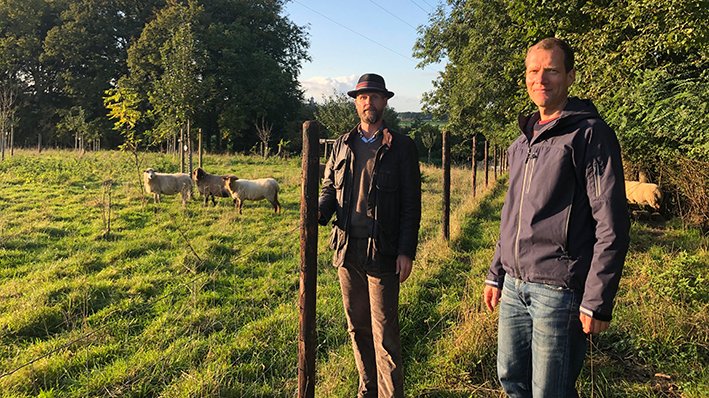
„Was kann Landwirtschaft anders machen? — In Ihrer Ausgabe vom 21.10.2021 berichtet die RP über erste Aktivitäten des Forschungsschwerpunktes „Nachhaltige Ernährungssysteme“ der Hochschule Rhein-Waal zur Etablierung und Erprobung von Agroforstsystemen am Niederrhein. Dabei handelt es sich um den kombinierten Anbau von Feldfrüchten oder Grünland mit Gehölzen und ggf. ergänzt durch Tierhaltung. Agroforstsysteme bieten eine Reihe von ökologischen Vorteilen sowie das Potenzial für eine Diversifizierung der landwirtschaftlichen Einkommen, z.B. durch den Verkauf von CO2-Zertifikaten. Den gesamten Bericht können Sie hier lesen.“

Read More »