News

Ausschreibung für eine Bachelor-, Master- oder Studienarbeit

„Indoor-Farming in Deutschland statt Lebensmittelimporte aus dem Ausland? Analyse zu Agrarimporten und ihrem ökologischen Fußabdruck“ In Zusammenarbeit mit dem Startup Stallgrün und fachlicher Begleitung durch Agrobusiness Niederrhein e.V. soll untersucht werden in welchen Mengen Agrarprodukte aus dem Ausland importiert werden, die sich auch in Indoor-Farmen in ehemaligen Schweineställen anbauen ließen. Eine weitere Frage, die beantwortet werden soll ist, wie Lebensmittel aus regionalen Indoor-Farmen einen ökologischen Mehrwert gegenüber ihrem Equivalent aus Importware aufweisen. Für diese Fragestellungen werden Studierende gesucht, die im Rahmen einer Bachelor-, Master- oder Studienarbeit Forschung hinsichtlich der genannten Themen betreiben möchten. Die Arbeiten werden im Rahmen des Projektes TransRegINT

Read More »
Event

Veranstaltungen des Agrobusiness Niederrhein e.V.

Veranstaltungen des Agrobusiness Niederrhein e.V. In den kommenden Wochen werden einige spannende Veranstaltungen des Agrobusiness Niederrhein e.V. stattfinden von denen wir zwei gerne genauer vorstellen möchten : Die erste Veranstaltung ist die Auftaktveranstaltung (Kick-Off) des Interreg-Projektes Agropole Innovates: Diese kostenlose Veranstaltung findet am 13.09.23 um 14:30 Uhr im Versuchszentrum der LWK in Straelen statt. Das Treffen beginnt mit einer Begrüßung, bevor es eine Vorstellung des Agropole Innovates Projekt geben wird. Daraufhin werden vier Modellprojekte im Rahmen von Agropole Innovates vorgestellt, unter anderem „BeneFrass – Benefits of Frass“; ein Teilprojekt, das mit dem Forschungsschwerpunkt assoziiert ist. Die Veranstaltung soll als eine Gelegenheit

Read More »
Application

SDG Partnership – Strengthening education and research capacity for enhancing biodiversity conservation and sustainable natural resources use

Dear Students, How would you like to work in a 2-weeks research camp together with Ugandan and South African students in November 2023 to analyze and co-develop solutions for the sustainable development of Ugandan rural communities? The project team of the DAAD-funded SDG Partnership (“Strengthening education and research capacity for enhancing biodiversity conservation and sustainable natural resource use”) is excited to offer five students of HSRW an opportunity to take part in a three-week program, jointly organized with Makerere University (Uganda) and Central University of Technology (South Africa). The project budget will cover all expenses related to the travel to Uganda (flights, residence, visa

Read More »
Application

Fully-funded “Quiver Tree Doctoral Studentship”

We are pleased to share this opportunity for a fully-funded “Quiver Tree Doctoral Studentship”, developing and sharing new insights on managing baobab trees in African landscapes. This project is jointly funded by the Quiver Tree Foundation and the University of Exeter, as part of the Oppenheimer Programme in African Landscape Systems (OPALS; http://opals-exeter.org). Through a core focus on understanding the distribution of baobab trees over space and time (using free and open-source remote sensing techniques) and the demographic structures across the landscapes (informed by recruitment experiments and population analysis), this project will develop evidence-based insights to inform the stewardship and sustainable

Read More »
News

Baobab Research by Katie Meinhold: Discovering its transition from subsistence use to global markets

🔍 The Study: The research aimed to shed light on how Baobab managed to transition from sole subsistence use to an ingredient in (international) markets. 🔍 🌱 Why Baobab? Baobabs have a rich history deeply intertwined with the lives of people in sub-Sahara Africa. The nutritious fruit of the Baobab tree has been a vital source of sustenance for generations, yet its potential is not fully exploited yet. Compared to domesticated crops, baobab may well be better adapted to climate change and provide important income opportunities even when other crops fail. Exploring how wild, underutilized food resources like Baobab can be

Read More »
Podcast

New HSRW podcast episode – How to be Sustainable

You’ve probably heard the term sustainability a lot, and that’s no surprise. It is one of the most important topics of this day and age. As a university, HSRW is playing its part by carrying out research on sustainability-related topics, and in this special edition of the How to Hochschule podcast, you will be introduced to a few of HSRW’s researchers associated with the Sustainable Food Systems Research Centre! Join special guest Hari (from the earlier HSRW podcast episode, How to German), as he embarks on a journey to find out about some of the research that takes place with a

Read More »
News

Agroforst als Zukunft der Landwirtschaft

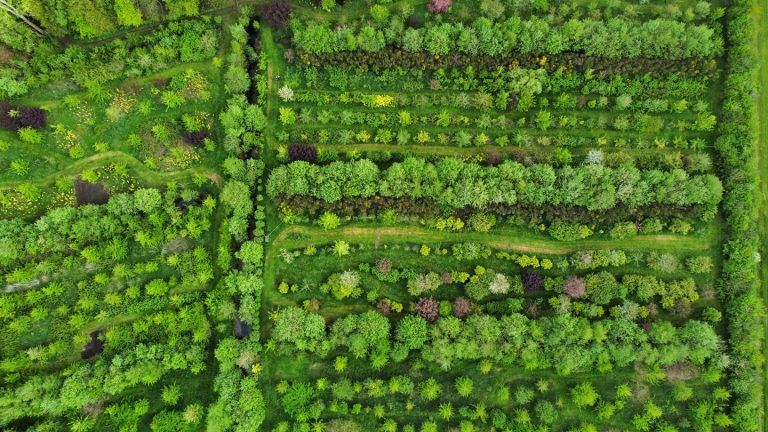
Artikel erschienen in der Rheinischen Post am Samstag, 15. Juli 2023, von Matthias Grass Das Projekt Agroforst der Hochschule Rhein-Waal ist gestartet. Es soll zeigen, wie Landwirtschaft in Zeiten des Klimawandels und eines sich verändernden Marktes eine Zukunft haben kann. Für Biobaubern ebenso wie für konventionelle landwirtschaftliche Unternehmen.  Ganzer Artikel hier: Rheinische Post, “Agroforst als Zukunft der Landwirtschaft”

Read More »
Event

Guest researchers from Kyrgyzstan visiting HSRW

Left to right: Dietrich Darr, Almanbet Nurlan Uulu, Philippe Boizeau, Sagynbek Orunbaev, Emil Begimkulov, Dirk Reiser and Jannike van Bruggen In the first week of July, two guest researchers from the American University of Central Asia (AUCA) in Kyrgyzstan visited the Rhine-Waal University of Applied Sciences. Professor Sagynbek Orunbaev is a specialist in remote sensing and hyperspectral image analyses for climate change and natural hazard risk research and his colleague Prof. Philippe Boizeau is assistant professor of environmental management and sustainable development. Focus of their visit was to identify possibilities for collaboration, among others under the SUFACHAIN research project coordinated by

Read More »
Award

Dr. Conor Watson wins research prize about his research on using insect frass as soil amendment at HSRW’s Research and Transfer Day

Insect rearing, as a sector that provides high-quality protein, allows upcycling of food waste into ingredients for food and feed, therefore making it suitable to turn into a zero-waste industry. Dr. Conor Watson’s research focuses on the fertilizing potential of the by-product of this industry, frass, which is a nutritious mixture of larval excrement, shed exoskeletons and undigested substrate. This approach would not only allow for the reduction of waste, but also provide high-quality protein with a lower environmental impact compared to conventional livestock farming, increase the concentration of protein in the soil and can be absorbed by plants, which in

Read More »
News

Deutsch-niederländische Zusammenarbeit in einer der bedeutendsten Agrobusiness-Regionen Europas

Deutsch-niederländische Zusammenarbeit in einer der bedeutendsten Agrobusiness-Regionen Europas INTERREG-Projekt der euregio rhein-maas-nord Projektlaufzeit: 01.09.2022 bis 31.08.2026 AGROPOLE INNOVATES – Ein deutsch-niederländisches Projekt zur Stärkung der Innovationskraft im Agrobusiness Zielgruppe des Projekts Das Agrobusiness ist in der deutsch-niederländische Grenzregion von großer wirtschaftlicher Bedeutung. Die Unternehmen der Branche sind hier innovativ aufgestellt. Zum Agrobusiness zählen Akteure aus allen Bereiche der Wertschöpfungsketten tierischer und pflanzlicher Produkte: – Landwirtschaft, Gartenbau, Gemüsebau – Zulieferer von Saatgut, Dünger, Maschinen und anderen Produktionsmitteln – Unternehmen der Lebensmittelverarbeitung – Handel & Logistik – Anbieter von Software und Automatisierungstechnik, Klima- und Regeltechnik – Dienstleistungsunternehmen mit Bezug zu Akteuren dieser Wertschöpfungskette – Öffentliche

Read More »
Event

Initiation of research collaboration in Armenia and Georgia

Members of the Food Systems Research Centre recently returned from a visit to Armenia and Georgia, aiming to foster a novel collaboration in agroforestry research. The visit included discussions with NGO, private and academic partners, such as Shen and the Armenian National Agrarian University in Armenia, or Elkana in Georgia, as well field visits to gain a better understanding of the current agroforestry systems in these countries. With agroforestry being a relatively new concept in these countries, despite traditional systems observable on the ground, we are confident that a fruitful research collaboration will gain force in the upcoming months and years.

Read More »
Event

Agroforestry Seminar

“Shen” charitable non-governmental organization and the Armenian National Agrarian University are starting a series of seminars on agroforestry.  During the seminars, the speakers will present the results of their research in Europe, Central Asia, and Latin America, paying attention to climatic and natural conditions similar to Armenia. Thus, they will provide approaches and solutions to contribute to the sustainable use of uncultivated land in Armenia.  The seminars will be held regularly – once a month. English-Armenian-English simultaneous translation will be provided during the seminar. The aim is to deepen the understanding of the specific topics of agroforestry gradually.  The purpose of the first

Read More »