New Project: TransPlant
TransPlant Enhancing the transfer of plant research results into practice and capacity building in plant sciences MKV NRW 2024-2026 TransPlant aims at creating a collaborative effort among three partner universities, namely Heinrich-Heine University Düsseldorf, University of Cologne, and Rhine-Waal University of Applied Sciences, focusing on enhancing the transfer of plant research results into practice and capacity building in plant sciences. The transfer activities should initially focus on two main research areas: nutrient use in crops and cropping systems, and development and use of biological agents for more ecologically friendly plant production. The project aims at contributing to develop sustainable crops and

🍃Empowering Young Scientists: Dr. Florian Wichern’s Vision for ‘Nutrient Cycling in Agroecosystems’🌱
Article Prof. Dr. Florian Wichern, a distinguished figure in soil science and plant nutrition, has recently assumed the role of Editor-in-Chief for ‘Nutrient Cycling in Agroecosystems.’ Known for his engaging teaching methods in soil science, Dr. Wichern emphasizes practical relevance and the foundational role of soil science in agriculture. In his editorial role, he manages the quality and content of the journal, highlighting the importance of rigorous reviews and involving young scientists globally. Dr. Wichern’s research focuses on nutrient cycling in agroecosystems, addressing issues such as nutrient circularity and soil carbon conservation. His integrative approach underscores the significance of nutrient management

Interest in joining an agroforestry project in Brazil? Apply now!
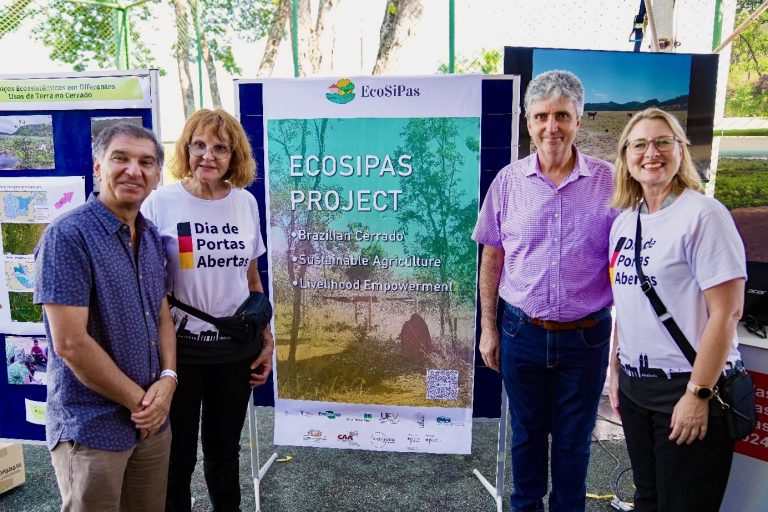
Are you eager for a change of perspective? For a unique experience where sustainability matters and where you critically engage with global connections? Then apply by January 20th for your ASA scholarship! Since 2021, researchers and students from Rhine-Waal University and the Universidade de Brasília have been collaborating on sustainable development approaches for the Cerrado region in Brazil in the realm of the EcoSiPas project. The project aims to contribute to the sustainable management of the Cerrado by gaining a deeper understanding on the various ecosystem services different land-use types provide. One of these ecosystem services under investigation are products derived from native fruit trees

Stakeholders to work with Academia to strengthen Education & Research in Biodiversity Conservation
About the Event On 16th November 2023, national and international stakeholders participated in the kick off workshop hosted at Makerere University to further consolidate various schools of thought aimed at producing a holistic and relevant graduate student equipped with practical skills, research and problem solving abilities aligned to Sustainable Development Goals. The blended kick-off workshop, which brought on board the academia, researchers, private sector, civil society, business community and graduate students set the pace for the implementation of the Sustainable Development Goals (SDG) Partnership Project titled: Strengthening Education and Research Capacity for Enhancing Biodiversity Conservation and Sustainable Natural Resources Use.” Expected to benefit over 350

New ways in soil improvement: Prof. Dr. Khalid Khan presents innovative research on biochar
In the image above: Prof. Dr. Khalid Khan with Prof. Dr. Florian Wichern at the tropical greenhouse. About Prof. Dr. Khalid Khan, a scientist from PMAS-Arid Agriculture University Rawalpindi, shared valuable insights into his three-month research stay at our university, supported by the Alexander von Humboldt Foundation. His research focuses on biochar, specifically its development and application to enhance soil quality in dry agricultural regions. Biochar, produced through biomass pyrolysis, is an advanced form of charcoal with the potential to boost soil fertility and reduce environmental impact. His work offers promising perspectives for ongoing research at the host university. The implications

The meaning of walnut forests to cosmetics manufacturers, lecture by Dirk Bockmühl (21.11., Campus Kleve)
Studium Generale The lectures of Studium Generale offer scientifictalks that are intelligible for everyone and help tobuild a general universal education. All events arefree to attend for everyone and target bothstudents and the public, citizens and pupils aswell as all members of the university and peopleinterested in science. The evening events not onlyaim to provide further education, but also providea platform for lively exchange and discussions oncurrent issues. What do walnut forests in Kyrgyzstan have to do with cosmetics manufacturers in the Lower Rhine region? 21.11.2023, Audimax, Hochschule Rhein-Waal, Campus Kleve The walnut forests in Kyrgyzstan provide an essential livelihood for

Vortrag von Prof. Wichern über Bodenernährung für eine nachhaltige Pflanzenernährung (21.11., Uni Köln)
Vortragsreihe “Globale Ernährungssicherung” im WS 23/24 an der Uni Köln Zeit: Immer dienstags von 18:00 Uhr bis ca 19:30 Uhr Ort: Hörsaal 0.024 im Institut für Pflanzenwissenschaften (Biozentrum), Zülpicher Straße 47b, 50674 Köln Die Ursachen für Hunger sind vielfältig: Armut, Konflikte, extreme Naturereignisse, Ungleichheit oder Bevölkerungswachstum tragen unter anderem zu Ernährungsunsicherheit bei. Wie können wir trotz der vielfältigen Herausforderungen globale Ernährungssicherheit erreichen und welche Aufgaben müssen wir meistern um die Weltbevölkerung nachhaltig zu ernähren? Es gibt viele gute Lösungsansätze aus unterschiedlichen Disziplinen. In unserer Ringvorlesung behandeln wir die unterschiedlichen Themen aus den Sichtweisen der verschiedenen Fachbereiche und verdeutlichen so die interdisziplinären Zusammenhänge und

Exploring Small-Scale Cooperative Black Soldier Fly (BSF) Production in Africa
Despite extensive research on Black Soldier Fly (BSF) farming, Africa faces unique challenges due to social structures, surplus labor, and economic pressures. This project aims to address this by developing a model system and process for cooperative small-scale BSF production using locally-sourced materials, shifting from large centralized facilities to a decentralized approach. The primary objective is to design a prototype cooperative BSF production system suitable for small-scale operations in Africa, promoting self-sufficiency and sustainable insect protein production. The local partner organization, the chicken farm ET VOICI, in Benin will provide crucial support for fieldwork, data collection, ensuring the successful implementation of

Solar-Powered Incubators for Sustainable Poultry Farming in Benin
In Benin, a country plagued by frequent power outages, poultry farmers rely on low-cost Chinese plastic incubators for hatching eggs. These unreliable incubators can lead to complete hatching failures when temperature control systems fail, exposing eggs to prolonged high temperatures. Benin’s poultry industry comprises traditional natural incubation methods, industrial partnerships with Chinese companies for Lohmann chicks, and DIY incubators made from repurposed items like dressers and old refrigerators, primarily used for specialty breeds. This project aims to explore the development of one or two solar-powered incubators, with capacities of 500 and 1000 eggs respectively, potentially in collaboration with an electrical engineering

Exploring Adaptation of ‘Bielefelder Kennhuhn’ to African/Tropical Environments and Its Resilience to Disease
Investigation about the adaptability of the popular ‘Bielefelder Kennhuhn’ breed to African and tropical conditions, considering factors such as feathering, diet, outdoor access, and pre-existing health conditions. Currently, a group of 6 ‘Bielefelder Kennhühner’ is experiencing a significant decrease in egg production, with just approximately 1 egg per week collectively. Additionally, one of the hens succumbed to avian influenza during a time when all roosters and hens were housed together. The study will involve extensive field observations, data collection on feathering, feeding practices, and health histories of the hens, as well as genetic analysis to understand their resilience to tropical conditions

Investigating Gumboro Disease’s Impact on Poultry Mortality and Gender Susceptibility
The Gumboro disease poses a formidable challenge to poultry health, with the potential to devastate valuable breeding stock. This project delves into the insidious nature of Gumboro disease, which has led to the loss of a significant generation of prized chickens. Notably, male chickens seem to exhibit higher mortality rates compared to females, a gender-specific susceptibility that has not been extensively explored. This research can be conducted using qualitative/quantitative/mixed research methods, or involving a research stay at ET VOICI chicken farm in Benin, which will be able to provide local supervision, support in finding local accommodation, shared office, contacts with representatives of the University

CONFARMED: Multidisciplinary approach to CONserve and FARM EDible insects for acircular food economy in Uganda
Introduction Humanity faces interconnected challenges such as food insecurity, poverty, climate change, and biodiversity loss, exacerbated by unsustainable practices and resource depletion. Soil degradation, driven by unsustainable agriculture, threatens food production. Simultaneously, deforestation for agriculture reduces global forest cover, worsening climate change, poverty, and food insecurity. Currently, 768 million people globally suffer from undernourishment, with Sub-Saharan Africa and Eastern Africa particularly affected, further aggravated by crises like the pandemic and conflicts. Innovative food sources are urgently needed. Research highlights the potential of forests, trees, and edible insects to diversify food production, improve environmental and socioeconomic outcomes, and enhance human nutrition. Edible insects,