

From Soil to Subsidy: How Agroforestry is Financing a Climate-Resilient Futuređź’ˇ

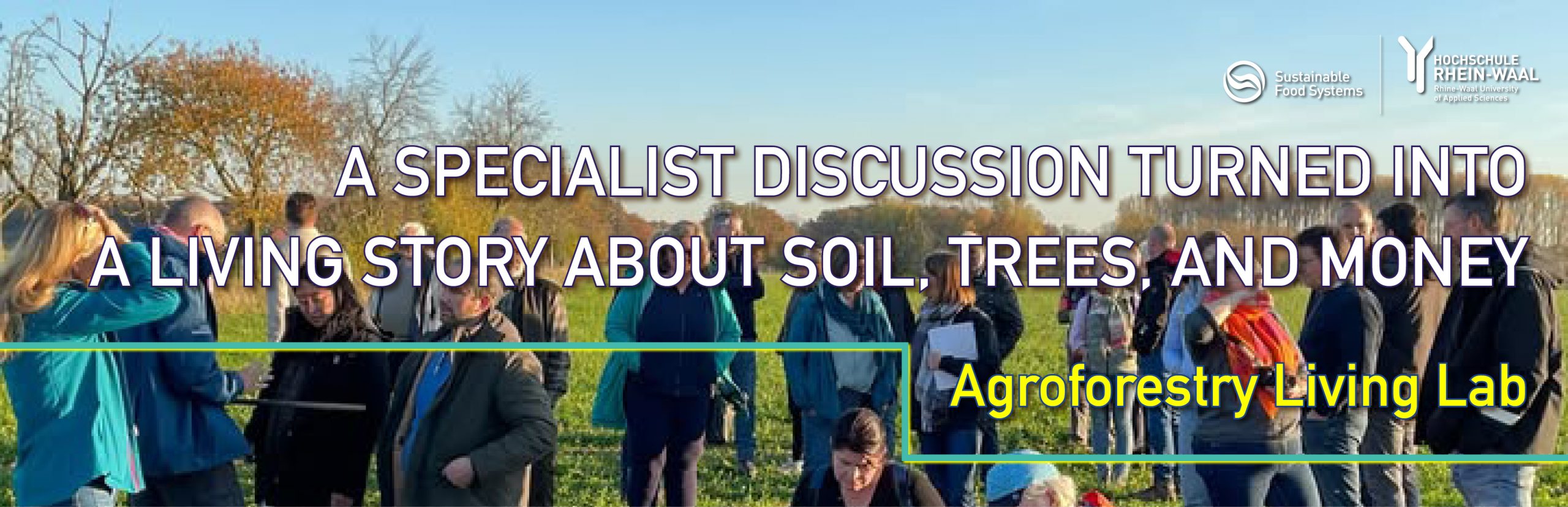
Agroforestry systems are reshaping how farms on the Lower Rhine think about climate resilience, soil health, and new finance models. At Rhine-Waal University of Applied Sciences, this transformation became tangible when the Agroforestry Living Lab hosted its 10th Lower Rhine Agroforestry Practice Roundtable, turning a specialist discussion into a living story about soil, trees, and money.

573105148_17924889294166941_7463685064282998079_n

A farm where water stays longer

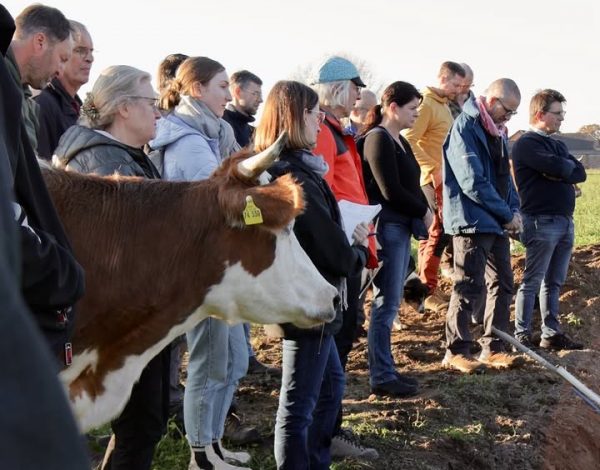
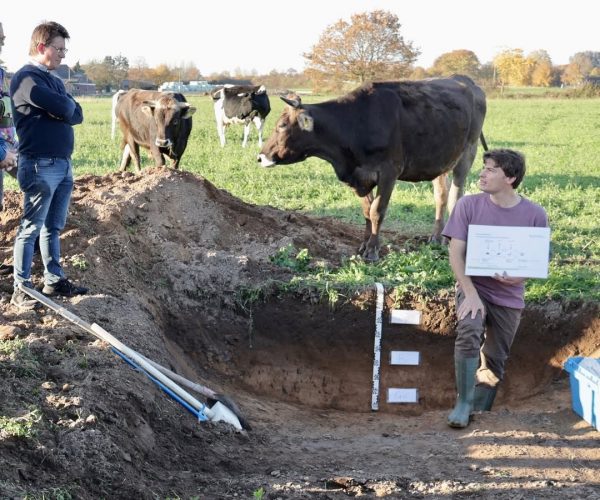
On a breezy day at Rouenhof in Kevelaer, visitors followed Anne and Bernd Verhoeven through fields that stay green weeks after neighboring plots have turned pale. The organic farm, on brown soil with sandy loam at the edge of the Sonsbecker Schweiz region, rotates grain every three to four years, otherwise relies on clover, alfalfa, and diverse grass mixtures to build fertility.

The centerpiece of the tour was Bernd Verhoeven’s approach to “retaining water in the soil,” a challenge that is becoming more pressing with irregular rainfall and hotter summers. Instead of seeing wood chips as waste, he uses them in several stages: first as bedding for his cows, then as a key ingredient for a long-lasting humus that keeps his soils loose, crumbly, humus-rich, well-aerated, warm, and visibly greener for about four weeks longer than surrounding fields.

Compost as climate tool

The path from wood chip to fertile field begins with a simple neighborhood collaboration: a local tree surgeon supplies the wood chips that first serve as animal bedding and bind ammonia, reducing odors in the barn. Mixed with straw, feces, and urine, this material is then turned three or four times—depending on outside temperature—until it becomes stable compost.

This additional work step pays off in the field. The resulting humus acts like a sponge, improving water retention and helping the soil buffer both drought and heavy rainfall. For the participants of the roundtable, the compost heaps and the long-lasting green of the fields made visible how agroforestry-inspired practices can strengthen farm resilience far beyond the tree rows themselves.

Agroforestry: more than “just hedges”

In the discussion that followed, Andrea Sausmikat, an agroforestry consultant from the North Rhine-Westphalia Chamber of Agriculture, drew a clear line between classic hedges and agroforestry systems used for timber or food production. While hedges become protected landscape features under nature conservation law once planted, agroforestry strips on agricultural land can be removed again, even though they also deliver benefits such as timber, fruit, or nuts, as well as biodiversity, and protection from wind erosion, drought, and flooding.

This flexibility opens doors for different financing strategies. Since 2023, agroforestry areas used for timber or food production have been recognized as land use areas in Germany’s CAP Strategic Plan and can be subsidized via the ELAN application under land use code 081 with basic income support. In addition, Eco-Regulation payments are available for agroforestry structures on arable land or permanent grassland, provided that hedgerows meet defined size and area criteria published by the Chamber of Agriculture.

Where the money comes from

Beyond basic CAP payments, the roundtable highlighted a mosaic of funding sources that, when combined, can make agroforestry economically viable. Agroforestry can be paired with agri-environmental measures, and regional nature conservation organizations support hedges, trees, and wildflower strips through dedicated funding schemes.

Creative financing is gaining ground as well: farms are experimenting with crowdfunding via platforms such as Ackercrowd or AgoraNatura, seeking support from foundations like Environment and Development NRW, and working with climate and carbon-oriented organizations such as Myclimate and Vivo Carbon. Tree sponsorship models add a personal touch, allowing citizens or companies to finance individual trees or strips while strengthening ties between farms and local communities.

581996607_17924889321166941_3168575760974406275_n

Borderless Landscape: hedges across frontiers

The landscape itself became the central character when Verena Busch from the Nature Conservation Center in the Kleve district presented the Interreg project “Borderless Landscape.” Together with the Dutch Vereniging Nederlands Cultuurlandschap (VNC), the project aims to create a climate-resilient, structurally diverse, species-rich, and accessible cultural landscape on both sides of the German–Dutch border until June 2027.

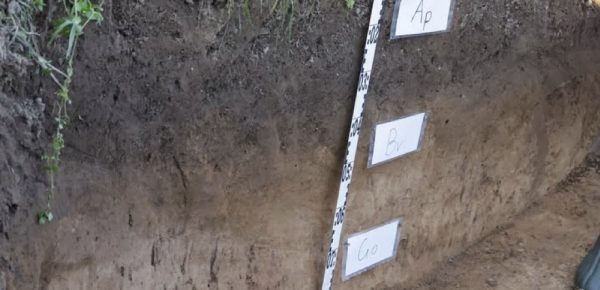
Improved soil functions through increased humus and soil life in the field – that's what the agroforestry system promises. copy

To achieve this, the project finances, among other measures, 5 km of hedgerow plantings on both sides of the border, including planting material and planting work. Eligible are hedgerows in the cultivated landscape, protected agroforestry systems that remain in place for at least ten years, and wildflower strips or areas; the project covers planting material and sowing costs partially or fully, while landowners assume responsibility for establishment and long-term maintenance. Interested farmers in the participating municipalities can contact project coordinator Verena Busch directly by telephone or email to discuss possibilities on their land.

New life for orchards

Orchards, often seen as quiet witnesses of traditional agriculture, also received the spotlight. Hubert Lemken from the Kleve District Landscape Conservation Association (LiKK) outlined how these diverse habitats can be financed and rejuvenated. Alongside using their own funds, farmers can reach out to sponsors or foundations, or integrate orchards into measures funded under broader climate and biodiversity programs at federal, state, or municipal level.

The Rhineland Regional Association (LVR) offers subsidies for planting material for standard fruit trees as well as hedges or rows of trees, based on a formal application. Additional opportunities include contractual nature conservation agreements, use of compensatory or eco-point areas, and, looking ahead, the potential for generating COâ‚‚ certificates as carbon storage in permanent tree structures becomes more systematically recognized.

Agroforestry is more than a farming technique—it’s a story of innovation, collaboration, and adaptation. From composting wood chips to securing diverse funding sources, farmers and researchers are building a future where agriculture thrives in harmony with nature. The Agroforestry Living Lab at Rhine-Waal University of Applied Sciences continues to connect practical experience with policy and science, demonstrating how agroforestry can help secure both the soil and the economy in a changing climate.

Source © LZ Rheinland
Photos © Catrin Senger